
The Government of Mexico announced the ban on the use, production, commercialization, and import of 35 pesticides highly harmful to health and the environment. The decree will be published in the Diario Oficial de la Federación (DOF) and seeks to ensure cleaner, safer, and more sustainable agriculture for both consumers and farmworkers.
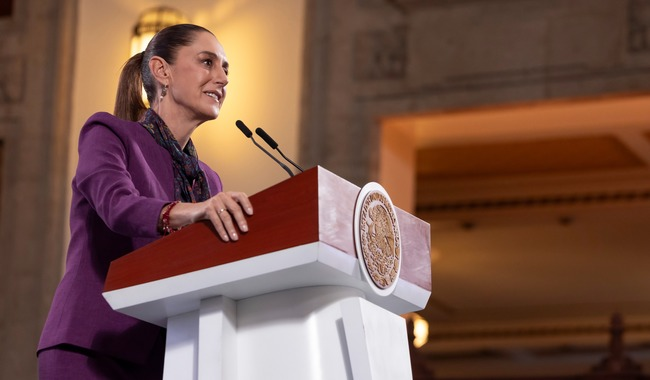
President Claudia Sheinbaum Pardo emphasized that this measure represents a commitment to public health and environmental protection, recalling that several of these pesticides are already banned in many countries. “Some of them cause great harm to health and the environment, and here there was no prohibition on their use. Today Mexico takes a historic step toward sustainable agriculture,” she stated during her morning press conference.
Julio Berdegué Sacristán, Secretary of Agriculture and Rural Development, explained that the ban covers 35 molecules identified in international agreements such as Basel, Stockholm, and Rotterdam. Among them are Aldicarb; Carbofuran, banned in Canada and Europe; Endosulfan, restricted in 50 countries due to its effects on the neurological development of infants; and DDT, whose use is prohibited worldwide.
Berdegué pointed out that this decision is historic, as the last pesticide ban in Mexico took place in 1991 and covered only 21 active ingredients. With this new measure, Mexico aligns with international standards and advances toward more responsible agriculture with stricter regulation on the use of chemical substances.
The federal government also announced that the progressive elimination of harmful pesticides will continue: in 2026 a second group of substances will be banned, and in 2027 a third list will be published. With this, the country aims to consolidate modern, sustainable, and safe agriculture for the entire population within the framework of the Second Stage of the Fourth Transformation.