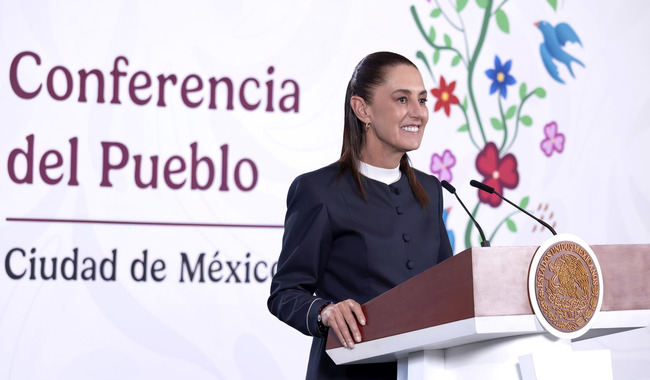

Mexican President Claudia Sheinbaum Pardo highlighted that Mexico reached a historic record in Foreign Direct Investment (FDI) during the first quarter of 2026, registering 23.591 billion dollars, the highest figure for a similar period since 2018.
During “Las mañaneras del pueblo,” the president emphasized that this result reflects international confidence in the country and the strengthening of the national economy. She also noted that Mexican exports grew by 21.8 percent between January and April 2026 compared to the same period last year.
Sheinbaum explained that this increase helped generate a positive trade balance, as Mexico exported more than it imported. She specified that imports rose by 19.9 percent, resulting in a trade surplus of 3.508 billion dollars.
“The foundation of Plan México is to produce more for the domestic market and for exports,” the president stated while stressing that these indicators demonstrate economic dynamism and productive growth in the country.
In another matter, Claudia Sheinbaum reported progress in the credentialing process for the Universal Health Service aimed at older adults and people with disabilities, with the goal of allowing them to receive medical care at any health center or hospital regardless of their healthcare affiliation.
Universal Health Access Credentialing Moves Forward
The president explained that registration will remain open until November 14 at 2,136 modules located across 24 states, which can be consulted through the Government of Mexico’s Bienestar platform.
She detailed that this strategy will allow the digitalization of medical records and facilitate interoperability among institutions such as IMSS, IMSS Bienestar, and ISSSTE, while also strengthening the Salud Casa por Casa program.
Deputy Health Minister Eduardo Clark García Dobarganes reported that registration will require an official ID, proof of address, and a phone number, following a schedule organized by the first letter of applicants’ last names.
Meanwhile, Welfare Secretary Leticia Ramírez Amaya stated that the Salud Casa por Casa program has already carried out 18.4 million visits to 11.5 million older adults and people with disabilities throughout the country.