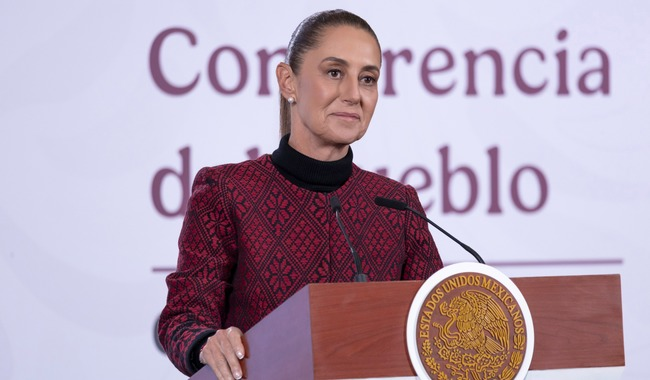

Mexican President Claudia Sheinbaum Pardo highlighted a significant increase in surgeries and specialty consultations conducted by the Mexican Social Security Institute (IMSS), the Institute for Social Security and Services for State Workers (ISSSTE), and IMSS Bienestar during 2025. She stated that this progress reflects the strengthening of public healthcare and the government’s commitment to ensuring the right to health for all.
Speaking during her morning press conference, President Sheinbaum emphasized that the rise in health services is the result of training more medical specialists, expanding healthcare infrastructure, and embracing the principle that “public services must be the best.” She reiterated the goal of building a universal system in which the three institutions collaborate seamlessly to provide quality, equitable care.
IMSS Director General Zoé Robledo reported that in 2025, the institution carried out 1.79 million surgeries, 29.2 million specialty consultations, and 104 million family medicine consultations—far surpassing 2018 figures. Projections for 2026 include 2.15 million surgeries, 32 million specialty consultations, and 108 million family medicine visits, as part of the 2-30-100 Strategy.
At ISSSTE, Director Martí Batres stated that over 308,000 surgeries and 24 million consultations were performed, made possible by the renovation of 49 operating rooms, the addition of 28 new ones, and voluntary schedule extensions by medical staff. Meanwhile, IMSS Bienestar head Alejandro Svarch reported surpassing expectations with over 51 million general consultations, 6 million specialty visits, 250 transplants, more than 500,000 births, and the hiring of over 6,000 healthcare professionals.
Additionally, the government announced the opening of new hospitals in Mexico City, Mérida, Ciudad Madero, and Jiutepec, alongside the distribution of millions of medications via the Health Routes initiative. Health Secretary David Kershenobich also announced the construction of a new High Specialty Diagnostic Center in Tlalpan, featuring state-of-the-art PET-CT and MRI technology to serve patients from the National Institutes of Health.