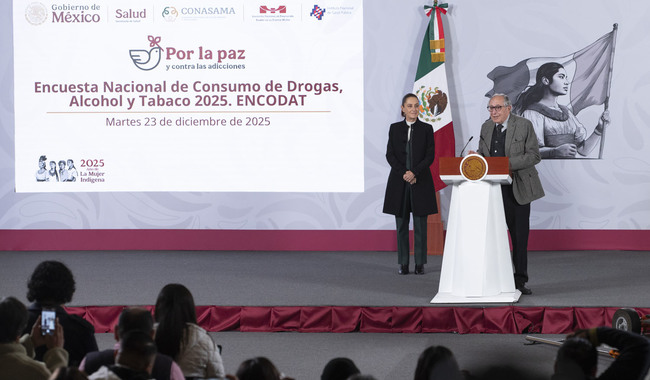

Mexican President Claudia Sheinbaum Pardo highlighted the progress achieved through the national campaign “Stay Away from Drugs. Fentanyl Kills”, as the results of the 2025 National Survey on Drug, Alcohol, and Tobacco Use (ENCODAT) were presented by the National Institute of Public Health (INSP). The survey revealed that non-medical fentanyl use dropped from 0.2% to 0.1%, while experimental use of illegal drugs among teenagers fell from 6.2% in 2016 to 4.1% in 2025.
During the morning press conference, Sheinbaum emphasized that the strategy has been effective thanks to school-based campaigns, family involvement, and media outreach. She announced that the next phase of prevention efforts will focus on tackling methamphetamine use, which has shown an increase, along with opioid medications such as tramadol, now subject to stricter regulations.
Health Secretary David Kershenobich Stalnikowitz explained that the ENCODAT surveyed a sample of 19,200 individuals, divided between adolescents aged 12 to 17 and adults aged 18 to 65. Among adults, experimental drug use rose from 10.6% in 2016 to 14.6% in 2025, while among adolescents, usage dropped — especially for cannabis (from 5.3% to 3.7%) and amphetamines (from 0.6% to 0.5%).
The survey also reported a decrease in alcohol consumption among adolescents — from 28% to 17.8% — and a reduction in tobacco smoking from 17.6% to 15.1%. However, the use of electronic cigarettes increased from 1.1% to 2.6%, prompting plans to strengthen regulation and educational campaigns on vaping risks. Among women, lifetime alcohol consumption rose from 62.6% to 69.3%.
Regarding mental health, adolescents were identified as the most vulnerable group, showing signs of psychological distress, suicidal behavior, violence, gambling, and excessive video game use. In response, President Sheinbaum stressed the need for a comprehensive strategy involving the government, families, and schools to provide wellness alternatives. The full ENCODAT results will be available on the INSP website and published in the Mexican Journal of Public Health.