
The Government of Mexico, through the Secretariat of Infrastructure, Communications, and Transport (SICT), reported that the Highway Infrastructure Program has reached an overall 60% progress, supported by an investment of 17 billion pesos. Currently, there are 70 active work fronts employing more than 6,000 workers and 1,700 machines, driving the expansion and modernization of the national road network.
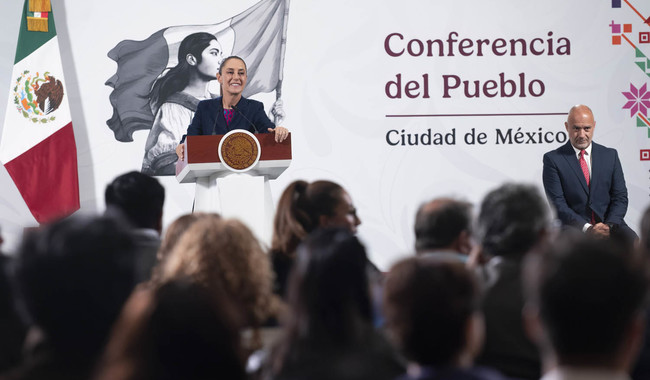
President Claudia Sheinbaum Pardo highlighted that this progress marks a significant achievement for the year’s end in terms of infrastructure. She emphasized that every project has an executive plan or comprehensive tender, reflecting rigorous planning and transparency. “Highway works are essential for national connectivity and the well-being of communities,” she affirmed during her morning press conference, “Las Mañaneras del Pueblo.”
Jesús Antonio Esteva Medina, Secretary of Infrastructure, Communications, and Transport, explained that the program consists of four main components: continuity works, priority corridors, bridges and interchanges, and the Highway Program of Guerrero. Among the projects with the greatest progress are the Nichupté Bridge in Quintana Roo (87%), the Rizo de Oro Bridge in Chiapas (82%), and the San Ignacio–Tayoltita highway in Sinaloa and Durango, which is nearing completion.
The priority corridors cover over 193 kilometers across several states, with investments exceeding 10 billion pesos. These include the Cuautla–Tlapa, Tamazunchale–Huejutla, Bavispe–Nuevo Casas Grandes, Macuspana–Escárcega, and Salina Cruz–Zihuatanejo routes, as well as the Toluca–Zihuatanejo highway in the State of Mexico and Guerrero, which shows 33% progress. Meanwhile, bridges and interchanges account for approximately 1.8 billion pesos in investment, with projects in Baja California Sur, Veracruz, Morelos, Tlaxcala, and Jalisco, among others.
The Highway Program of Guerrero involves the intervention of 68 bridges, of which 21 have been rehabilitated and four newly constructed. In addition, progress continues on the construction and improvement of eight highways through mixed investment totaling 14 billion pesos, enhancing connectivity between regions and promoting safe mobility across the country.
Through these actions, the Government of Mexico reaffirms its commitment to modernizing national road infrastructure, strengthening communication among communities, and promoting economic and social development with a vision of comprehensive planning and territorial justice.